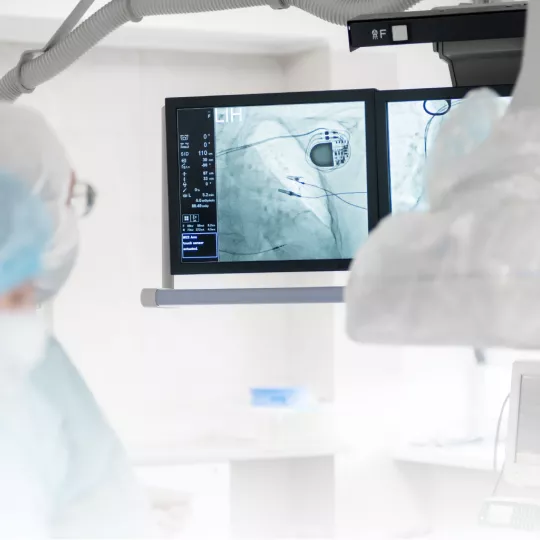
EMA's extended mandate: Launch of scientific advice pilot for medical devices slider

Medical devices

Medical devices are products or equipment intended for a medical purpose. They are regulated at EU Member State level, but the European Medicines Agency (EMA) is involved in a number of regulatory processes.
HumanMedical devicesRegulatory and procedural guidance

Manufacturers can place a CE (Conformité Européenne) mark on a medical device once it has passed a conformity assessment.

The conformity assessment usually involves an audit of the manufacturer's quality system. It can also include a review of technical documentation from the manufacturer on the safety and performance of the device - this depends on the type of device.

EU Member States designate accredited notified bodies to conduct conformity assessments.

Many medicines need a medical device to be used. With ongoing advances in technology, the number of new therapies that combine medicines and devices is increasing.

For certain high-risk devices, notified bodies need to consult expert panels before issuing a CE (Conformité Européenne) certificate. These expert panels benefit from EMA's technical and scientific support. 

Initiatives are ongoing to extend the role of expert panels to support the development and assessment of breakthrough and orphan medical devices.

In some cases, the notified body must seek a scientific opinion from EMA or a national competent authority before issuing a CE certificate.

In this section

High-risk medical devices

Guidance on the consultation procedures and scientific advice for high-risk medical devices and the outcomes of the procedures

Orphan medical devices

Manufacturers of high-risk medical devices and notified bodies can request advice on possible orphan device status and on the clinical evaluation of orphan medical devices

Breakthrough medical devices (BtX)

EMA is set to launch a pilot programme in the second quarter of 2026 that will allow manufacturers of breakthrough devices to access enhanced regulatory support and priority scientific advice from the medical device expert panels

EMA regulatory responsibilities

EMA's regulatory responsibilities vary by device category, including in vitro diagnostics. An overview is available below.

EMA can only address questions that fall within its remit.

Medicines used in combination with a medical device

EMA assesses safety and effectiveness of medicines used in combination with medical device within centralised procedure application for medicinal product

Medical devices with an ancillary medicinal substance

Notified body must seek EMA scientific opinion on quality, safety, and usefulness of ancillary medicinal substance if ancillary substance:

  • Is derived from human blood or plasma
  • Has been previously evaluated by EMA
  • Falls in mandatory scope of centralised procedure
Companion diagnostics

Notified body must seek EMA scientific opinion on suitability of companion diagnostic to medicinal product if the latter falls in scope of centralised procedure

Medical devices made of substances that are systemically absorbed

Notified body must seek scientific opinion of a competent authority - EMA provides scientific opinion on compliance of substance with requirements in Annex I of Directive 2001/83/EC

High-risk medical devices

EMA supports medical device expert panels that provide opinions and views to notified bodies on scientific assessment of certain high-risk medical devices and in vitro diagnostics

Orphan medical devices

EMA supports medical device expert panels that provide advice to notified bodies and manufacturers of high-risk medical devices on a possible orphan device status and on the clinical evaluation of orphan medical devices

Breakthrough medical devices

EMA is set to launch a pilot programme in the second quarter of 2026 to implement guidance on breakthrough devices (BtX). Under this pilot, manufacturers of breakthrough devices will be able to access enhanced regulatory support and priority scientific advice from the medical device expert panels administered by EMA.

Medical device shortages during public health emergencies

EMA's Executive Steering Group on Shortages of Medical Devices (MDSSG) ensures a coordinated and robust response to supply issues involving medical devices during a major event or public health emergencies. It implements measures to prevent and correct medical device shortages within the EU.

The MDSSG is supported by the the Medical Device Shortages Single Points of Contact Working Party (MD-SPOC WP). This working party will bring together single points of contact for shortages from national competent authorities for medical devices.

For more information, see: 

Medical device legislation

The Regulations on Medical Devices (Regulation (EU) 2017/745) and on In Vitro Diagnostic Devices (Regulation (EU) 2017/746) changed the European legal framework for medical devices. They introduced new responsibilities for EMA and national competent authorities in the assessment of certain categories of medical device, as follows: 

  • Medical Devices Regulation - applies for manufacturers placing new medical devices on the market; applies since 26 May 2021, repealing Directive 93/42/EEC on medical devices and the Directive 90/385/EEC on active implantable medical devices
  • In Vitro Diagnostic Devices Regulation - applies since 26 May 2022, repealing Directive 98/79/EC of the European Parliament and of the Council on in vitro diagnostic medical devices

Question-and-answer guidance on the implementation of these Regulations is available below:

Page update history

An update log is available to show the date and summary of changes to this webpage. It does not include updates to linked documents or minor edits like typos or broken link fixes.

The tracking of updates begins in March 2026.

2 March 2026

The content has been reorganised into subpages to make it easier to navigate.

Share this page